I didn't know who Kurt Vonnegut was 'til a few months ago.
It's kind of depressing actually, 'cause he introduced some fascinating ideas that I would have loved to have known years before. His concept that life happens all at once, and only humans see it in a linear fashion, is so intriguing. He makes death seem less of a sad thing, because he explains that the person was alive in many other moments. I guess this mentality could also pertain to people who were in my life before but are no longer here. Most of them sort of just slipped right out of my life, for reasons only Life itself would know. But for the few others that didn't end on good terms, I try not to go back to it except for the good memories. Because for all the bad memories, the nothing-at-all's and the closed glass door, I suppose there are just as many good memories.
This book really solidified my belief in fate. I wasn't so certain about it before. I kind of hoped that there was such thing as free will. But the miracles that happen in life and the bad things that happen in life (which are sometimes uncalled for) seem to prove that the future is a definitive thing. We don't know if shooting stars will land, but someone out there does. That's the scary thing.
Seventeen is too young to be messed with.
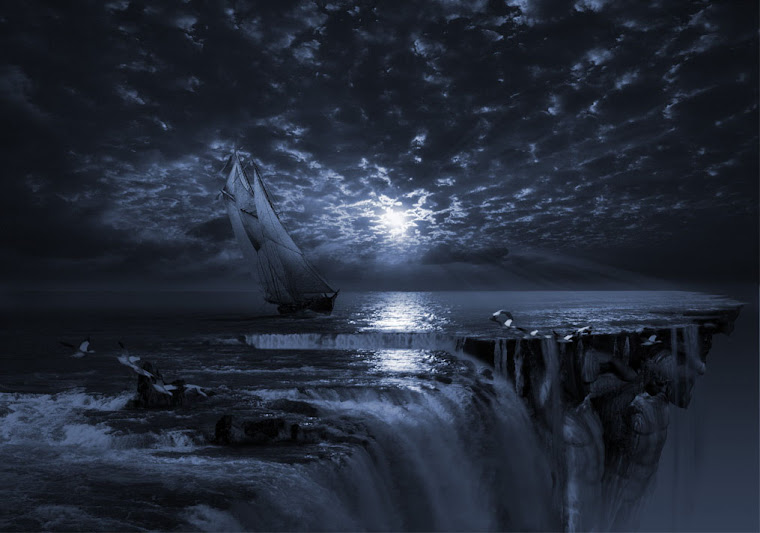
"All moments, past, present, and future, always have existed, and always will exist."


5.3.11
#3. On Censorship in Literature [edited]
Literature that raises eyebrows, that causes controversies, especially in the twenty-first century, should be censored or withheld. A lot of people will probably disagree with my opinion, but I have my reasoning.
I feel that in our world, right now, there's so much more freedom of expression because of social networking. Facebook allows employers and teachers to interact with employees and students at a highly personal level. There is also less privacy. And so many times the line blurs and people cross it without even realizing it. I don't think that's a good thing.
I don't consider S-5 controversial literature. Most people in our time and age don't. What I'm saying is literature considered CONTROVERSIAL IN OUR DAY AND AGE should be censored. I guess subject matter would be the main issue.
For controversial literature to not be censored, to not be withheld, seems dangerous to me. Songs these days are already poorly censored. I remember running into a 7-year-old singing London Bridge back when Fergie was huge in the music biz. Although songs like Fergie's London Bridge is not intended for little children, kiddies come into contact with it because it's a small world. Kiddies singing explicit song lyrics is frowned upon.
So why shouldn't controversial literature be banned/censored? If it's for the greater human good, then that's the way things should be. The Canadian Charter of Rights and Freedoms allows one to express his own thoughts and feelings as long as it doesn't interfere with someone else's rights. If a piece of literature offends certain groups of people, why should it not be censored?
I might be old-fashioned in some aspects, but there's just some things that you shouldn't say out loud. There's a reason why we have that little voice inside our heads to tell us when to stop talking. I'm just saying.
I feel that in our world, right now, there's so much more freedom of expression because of social networking. Facebook allows employers and teachers to interact with employees and students at a highly personal level. There is also less privacy. And so many times the line blurs and people cross it without even realizing it. I don't think that's a good thing.
I don't consider S-5 controversial literature. Most people in our time and age don't. What I'm saying is literature considered CONTROVERSIAL IN OUR DAY AND AGE should be censored. I guess subject matter would be the main issue.
For controversial literature to not be censored, to not be withheld, seems dangerous to me. Songs these days are already poorly censored. I remember running into a 7-year-old singing London Bridge back when Fergie was huge in the music biz. Although songs like Fergie's London Bridge is not intended for little children, kiddies come into contact with it because it's a small world. Kiddies singing explicit song lyrics is frowned upon.
So why shouldn't controversial literature be banned/censored? If it's for the greater human good, then that's the way things should be. The Canadian Charter of Rights and Freedoms allows one to express his own thoughts and feelings as long as it doesn't interfere with someone else's rights. If a piece of literature offends certain groups of people, why should it not be censored?
I might be old-fashioned in some aspects, but there's just some things that you shouldn't say out loud. There's a reason why we have that little voice inside our heads to tell us when to stop talking. I'm just saying.
#2. A Quote from K.V.
"I want to stay as close to the edge as I can without going over. Out on the edge you see all kinds of things you can't see from the center." - K.V.
Sometimes, when I stand in the middle of the action, I feel I don't have a full perspective of the situation. I always have tunnel vision in those cases. But when I'm on the outside looking in, I feel sure of what the right decisions are, even though I'm not the person making the decisions at that moment. But when you're on the outside, you want to make sure that you're not too far away.
Another way to look at this Vonnegut quote would be to emphasize carpe diem. Seizing the day. It's always been something easier said than done. We're all on the pursuit of happiness, but there's always been that brick wall. I hate that brick wall.
I wish I had had some of Vonnegut's wisdom all my life. He doesn't seem like the kind of man to dwell on the past. Slaughterhouse Five is representative of that. He seemed like the kind of man who didn't let the past impair his judgements for the future.
What doesn't kill you, can only make you stronger.
"Brick walls are there for a reason. The brick walls are not there to keep us out. The brick walls are there to show how badly we want something. Because the brick walls are there to stop the people who don’t want something badly enough. They are there to keep out the other people." - Randy Pausch
Sometimes, when I stand in the middle of the action, I feel I don't have a full perspective of the situation. I always have tunnel vision in those cases. But when I'm on the outside looking in, I feel sure of what the right decisions are, even though I'm not the person making the decisions at that moment. But when you're on the outside, you want to make sure that you're not too far away.
Another way to look at this Vonnegut quote would be to emphasize carpe diem. Seizing the day. It's always been something easier said than done. We're all on the pursuit of happiness, but there's always been that brick wall. I hate that brick wall.
I wish I had had some of Vonnegut's wisdom all my life. He doesn't seem like the kind of man to dwell on the past. Slaughterhouse Five is representative of that. He seemed like the kind of man who didn't let the past impair his judgements for the future.
What doesn't kill you, can only make you stronger.
"Brick walls are there for a reason. The brick walls are not there to keep us out. The brick walls are there to show how badly we want something. Because the brick walls are there to stop the people who don’t want something badly enough. They are there to keep out the other people." - Randy Pausch
Subscribe to:
Posts (Atom)